


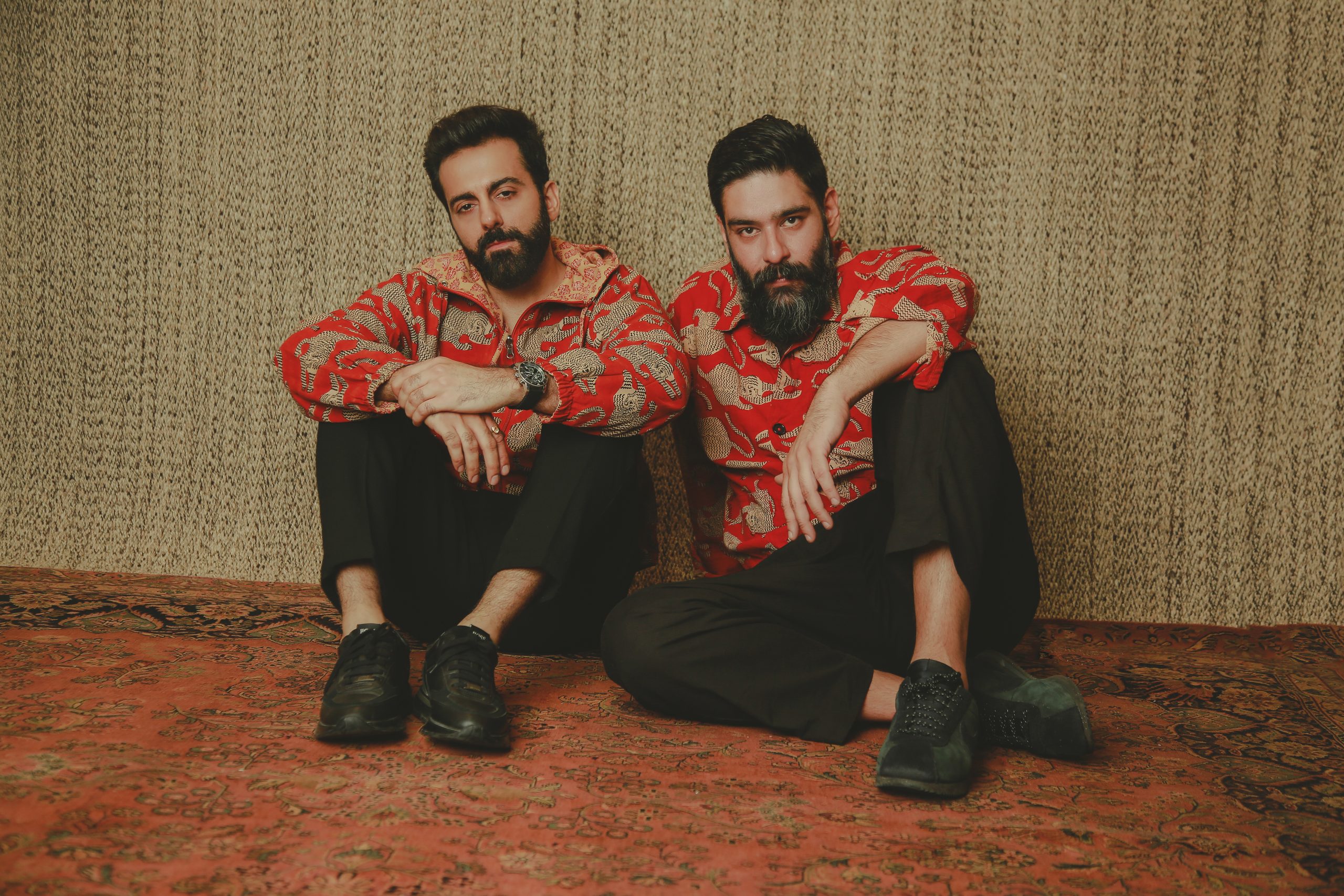
 Contributing Writer
How has 2026 been for you both so far, and what have been some of the standout moments of the year?
2026 has been quite the ride so far. There’s been a lot of travelling, making music and figuring out where we want to take things next. Releasing “Game Of Love” and “Aurora” through Groovebird has definitely been a highlight, because we get to build a world around the music ourselves. But some of the best moments are much smaller such as hearing a crowd sing a vocal back, or watching an unreleased track connect for the first time. You spend so long with these songs in a room that seeing them become part of someone else’s night is a pretty special feeling. Oh ya, being the first Indian duo to perform at the Hi Ibiza club was also a definite highlight of the year.
You’ve just released “Game Of Love” and “Aurora” on your Groovebird record imprint. What can you tell us about the ideas and inspiration behind these two tracks?
“Game Of Love” came from wanting to make something emotional that still has a real pull on the dance floor. We liked that tension between a feeling that’s quite intimate and a groove that brings everyone into it. We didn’t want to overcomplicate it. The initial idea is to give the emotion enough room and that’s always the starting point of our production.
With “Aurora,” we revisited the feeling of “Sauda,” which means a lot to us, and imagined where we could take it now. The Afro house direction gave that familiar emotion a different movement and energy. It was interesting to hear something we knew so well open up in a new way.
Your music brings together elements of Indian musical heritage with contemporary electronic sounds. How has your background and culture influenced the way you approach production?
A lot of it happens quite naturally. The melodies, voices and rhythms we grew up hearing have shaped our ears, even when we’re not consciously thinking about them. Sometimes a tiny vocal phrase carries a whole feeling or memory, and that becomes the starting point for a track. It’s this spirit of Nostalgia that has slowly become the central theme in our work and live sets.
We don’t sit down with a checklist of Indian elements to include. We follow a feeling of shared history and whatever moves us, then work out how to build around it. The biggest thing is making sure the voice or instrument still has its character once it enters an electronic arrangement.
What have you learned about yourselves as artists since starting to work together, and has there been a particular lesson that changed the way you make music?
We’ve learned that we don’t need to agree immediately for an idea to be worth exploring. Sometimes one of us hears something the other hasn’t caught yet, and you have to give it a little time. Staying true to each others vision of what a track should sound like is something we have slowly built and worked on over the years.
A big lesson has been knowing when to stop adding things. Earlier, it was easy to feel that another layer would make a track better. Now we’re much more comfortable taking things away. If the main idea is strong, you should be able to hear it clearly.
What has been the hardest lesson to learn during your journey so far, either creatively or professionally?
Probably accepting that the work and the response don’t always arrive in proportion. You can put everything into a track and it might take time to find its people. Another idea can come together very quickly and connect straight away. Also space is also sound, so we make sure to include plenty of breathing space in our work.
Also we’ve had to learn to take feedback seriously without letting every reaction decide what we make next. Professionally, being clearer about boundaries and expectations has also been a big learning.
You’ve played everywhere from Hï Ibiza with James Hype to Chelsea Music Hall in New York. How does performing to different audiences around the world affect the way you approach a set?
It makes you pay attention. Every room has its own pace, and you can feel quite quickly whether people want to settle into a groove or be pushed a little harder. Also Indian sounds are surely finding space in global dance floors. At a recent show in Turkey, the audiences response to Jija was something that we also didn’t anticipate with the whole language barrier. But I guess what they say is true, music has its own language.
We will also say that we have a direction in mind, but we leave space to respond. A track might need a longer build in one room and a more direct introduction somewhere else. What’s really exciting is seeing people connect with a vocal they might not understand. They still pick up on its emotion, and that gives us confidence to bring more of ourselves into the set.
If you could go back and give yourselves one piece of advice at the beginning of the Tech Panda & Kenzani project, what would it be?
Trust your ears sooner. We spent time questioning whether certain ideas were too different, or whether they would fit somewhere. Looking back, those were often the ideas worth following.
Also, finish the music. You learn a lot more from completing a track and living with it than from endlessly perfecting an eight-bar loop. We still have to remind ourselves of that sometimes.
Is there a record by another artist that you wish you had written or produced, and what is it about that track that makes you wish it was yours?
Bonobo’s “Kerala” would be one. There’s so much personality in the way the vocal is chopped and the rhythm moves, but the track still feels effortless. You can enjoy it immediately, then keep discovering little details on repeat listens. Also Dj Koze’s album Amygdala will forever be etched in in our subconscious for its sheer grit refusal to follow any rules.
That balance is something we really admire. It’s beautifully produced, but you’re feeling the music before you’re thinking about the production.
What’s your favourite piece of hardware or studio equipment at the moment, and what role does it play in your sound?
Honestly, our studio monitors probably deserve more credit than anything else. So much of our music depends on the relationship between the kick, bass and vocal, and being able to hear that properly changes the decisions we make.
It’s not the most glamorous answer, but having a listening setup we trust helps us know when a groove is working and when we’re just getting carried away because something sounds loud.
What are you hoping to achieve over the next year?
We want to release music that takes us somewhere new while still feeling like us. There are plenty of ideas we want to explore, and we’d like to give them the time they deserve.
Growing Groovebird and developing the live experience are also things we’re excited about. We want people to come away from a show feeling they’ve entered our world for a while. And hopefully, between all the travel and everything else, we keep enough space to enjoy making music together. That’s where all of this started.
Tech Panda x Kenzani “Aurora” is out now on Groovebird Records
Grab it here
Follow:
Tech Panda
Kenzani